


If you've darkened the doorway of a gun shop in the past three years, you'll have clocked the original HIKMICRO Lynx. It served as the entry point for many of us into thermal spotting, affordable enough not to require remortgaging the house, yet capable enough to pick out a heat signature in thick woodland after dark. Technology waits for no one, though, and the arrival of the Lynx 2.0 series represents a proper step forward that warrants serious consideration.
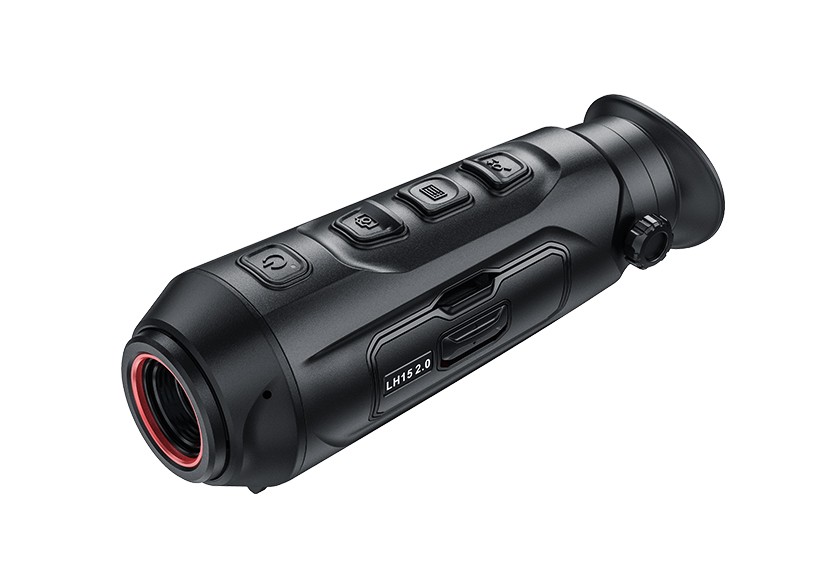
The first thing that strikes you is that HIKMICRO haven't mucked about with what made the original such a winner. Across the range, size remains the greatest asset. These units are genuinely pocket sized, easily tucked into a jacket or the side of your roe sack and forgotten until needed. For the mobile stalker who abhors being laden down with cumbersome kit, this is an enormous advantage. The rubberised armour feels grippier than its predecessor, and the button layout remains straightforward enough to operate whilst wearing gloves.
The Lynx 2.0 series comes in several configurations, typically differentiated by objective lens size and base magnification. The various models share the same core sensor technology and display, but the choice of lens affects both field of view and detection range. Stalkers working predominantly in woodland will likely find the wider field of view from shorter focal length models more practical, whilst those glassing open hill ground may prefer the additional reach of the longer lens variants. It pays to consider your typical terrain before settling on a particular model.
The most sensible upgrade across the entire series is the power source. Anyone who owned the original Lynx will recall the anxiety of the internal battery giving up the ghost in the field. HIKMICRO took the feedback on board, and the Lynx 2.0 now runs on a replaceable 18650 battery rated at 3.6 volts and 3200 milliamp hours. This is a game changer for extended sessions on the hill or all-night foxing outings, as you can simply carry a spare in your pocket. It also features an intelligent auto screen off function that puts the unit to sleep when you tilt it downwards more than 70 degrees or rotate it horizontally beyond 75 degrees, conserving power until you raise it back to your eye.
Under the bonnet, the performance has tightened up considerably. The sensor boasts a sensitivity of less than 20 millikelvins NETD. In layman's terms, this means the sensor is remarkably sensitive to minute temperature differences. In British stalking conditions, which typically means drizzle and rather flat ambient temperatures, this sensitivity prevents the background from washing out. It cuts through the atmospheric murk to show you the heat of a muntjac against a wet bracken bank far more clearly than its predecessors managed. The image is projected onto a crisp 1024 by 768 OLED display that handles contrast significantly better than older screens.
Image adjustment has been given proper attention. Beyond the expected brightness and contrast controls, there are adjustable sharpness and tone settings with warm and cold options to suit personal preference. Two scene modes are provided, with recognition mode suited to general use and jungle mode optimised for hunting environments with denser vegetation. The unit offers four colour palettes including white hot, black hot, red hot and fusion, cycled through with a single button press.
It's not all sunshine and roses, mind you. The base magnification varies by model, so you shouldn't lean too heavily on the digital zoom regardless of which variant you choose. Push the magnification beyond 2× and the image can become rather pixelated across all models, with the digital zoom extending through 1×, 2×, 4× and 8× settings. This is a spotter, not a telescope. The Lynx 2.0 also includes a hot tracking feature that automatically marks the hottest point in your field of view, which proves particularly useful when scanning dense cover where multiple deer might be bedded down.
A picture in picture mode displays a zoomed detail window at the top of the screen, useful when you've spotted something distant and want to examine it more closely without losing awareness of the wider scene. The built in distance estimation function allows you to set a target height for your quarry or a custom size, then bracket the animal between two markers to calculate approximate range. It works acceptably well, though a proper laser rangefinder will always be more precise.
The unit connects to a smartphone via Wi-Fi hotspot for use with the HIKMICRO Sight application, allowing remote viewing, capture and parameter adjustment. Video recording and still capture work reliably using built in memory, with files easily exported either through the app or by connecting to a computer via the USB Type C port. The operating temperature range spans minus 30 to plus 55 degrees Celsius, which will satisfy anyone stalking in the British Isles.
The Lynx 2.0 series represents the ideal everyday carry thermal for those entering the market or seeking a reliable backup to more substantial equipment. It may lack the long-range definition of the pricier Falcon or Condor units, but across all models it'll run all day on replaceable batteries, fits in your pocket, and won't require selling a kidney to acquire. For the practical stalker who values reliability and portability above all else, it's rather difficult to fault.
If you would like to get into deer stalking, then there’s no better place to start than with the Proficient Deer Stalker Level 1( PDS1): Proficient Deer Stalking Course - PDS1