For the stalker tired of carrying multiple optics, the HIKMICRO HABROK HQ35L offers a compelling, all-in-one solution for the field.
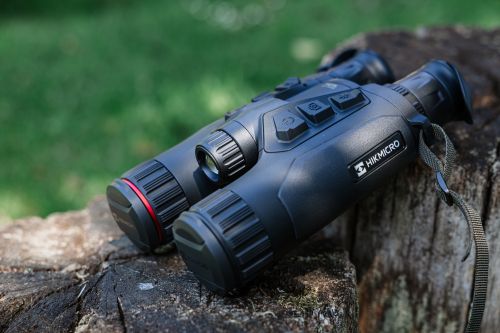
For the deer stalker who has grown weary of juggling multiple optical devices during an outing, the HIKMICRO HABROK series presents an intriguing proposition. This multi-spectrum binocular effectively combines a high-performance thermal imager with a digital day and night vision camera within a traditional binocular housing. The practical upshot is that one no longer needs to switch between a thermal spotter for detection and standard glass for identification because the HABROK handles both tasks from a single eyepiece.
At the heart of the unit sits a twelve-micron infrared thermal detector with sensitivity of less than twenty millikelvins, providing excellent separation of heat signatures against cold backgrounds with detection ranges extending to eighteen hundred metres. This is paired with a 2560 by 1440 low illumination optical detector delivering full colour images during daylight and crisp visuals when the light fades. The built in adjustable infrared illuminator, which HIKMICRO terms Smart IR, proves particularly useful during the final minutes of legal shooting light when positive identification becomes critical yet increasingly difficult.
The power system deserves particular praise. Rather than opting for a sealed internal battery that would leave users stranded when charge runs out, HIKMICRO has chosen replaceable 18650 cells rated at 3.6 volts and 3200 milliamp hours. The twin battery compartments sit on the underside of the barrels, and carrying a few spares in the pocket effectively eliminates any concerns about runtime during longer outings. This feels like a decision made by people who actually use equipment in the field rather than simply design it in an office.
The integrated laser rangefinder measuring to one thousand metres transforms what might otherwise be purely an observation tool into something more complete. Detecting a distant heat source, switching to the optical channel for positive identification, and then ranging the animal without lowering the device or fumbling for separate equipment represents a genuinely useful workflow. The continuous measurement mode with its one second refresh rate proves helpful when watching deer moving through woodland.
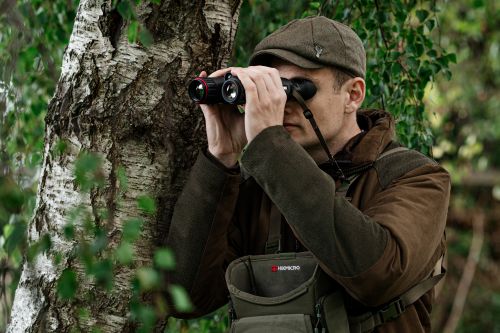
Handling the HABROK requires a small adjustment in thinking. Unlike conventional binoculars there are separate focus rings for thermal and optical channels that must be adjusted independently to achieve sharpness on both. The interpupillary distance adjusts in the familiar manner by moving the eyepieces apart or together, and individual dioptre rings allow fine tuning for each eye. None of this proves difficult but it does take a few sessions to become truly instinctive.
The thermal imaging offers several colour palettes including white hot, black hot, red hot and fusion modes alongside the standard optical view. A picture in picture function allows a zoomed thermal view to be displayed within the optical image, which works rather well when scanning a field edge in fading light. Digital zoom extends to eight times magnification with a feature called Zoom Pro enhancing detail when magnified, though as with all digital zoom there are practical limits before image quality suffers.
There are thoughtful additions beyond the core functionality. GPS positioning displays coordinates and altitude on screen, a compass shows direction of view, and hot tracking automatically marks the warmest point in the scene. Video recording and still capture work reliably and files transfer easily to a smartphone via the HIKMICRO Sight application.
The HABROK is not an inexpensive piece of equipment but then carrying separate thermal and optical devices of equivalent quality would likely cost considerably more. For woodland stalking in particular, where observation distances are shorter and the ability to switch rapidly between detection and identification matters greatly, this device makes a compelling case for consolidating the multiple optics into a single capable instrument.
If you would like to get into deer stalking, then there’s no better place to start than with the Proficient Deer Stalker Level 1( PDS1): Proficient Deer Stalking Course - PDS1